DIY vs Pro: When to Hire a Florist for Your Wedding
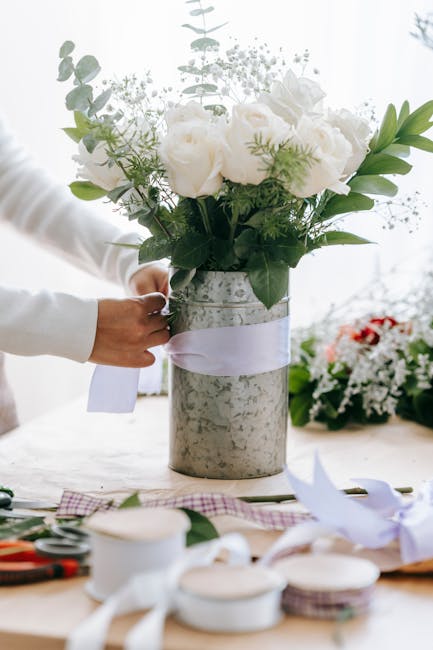
Wedding flowers look simple from a distance. Then you start pricing bouquets, counting stems, wondering who will buttonhole the groomsmen at 7am, and suddenly the whole thing feels less like a creative project and more like a logistical puzzle. That is exactly why the choice between DIY and hiring a florist matters. DIY vs Pro: When to Hire a Florist for Your Wedding is not just about saving money; it is about deciding where your time, energy, and risk tolerance really sit.
Some couples genuinely enjoy arranging their own flowers. Others have a clear vision but no wish to spend the night before the wedding trimming roses in the kitchen. Both are valid. The right answer depends on your budget, the scale of the wedding, the style you want, and honestly, how much you want to be doing at the eleventh hour while everyone else is trying to sleep. Let's break it down properly.
Why DIY vs Pro: When to Hire a Florist for Your Wedding Matters
Wedding flowers do more than decorate a room. They shape the atmosphere, tie the whole colour story together, and can make even a modest venue feel considered. The tricky bit is that flowers are time-sensitive, fragile, and not very forgiving if something goes wrong at the last minute. A ribbon that is one shade off? Fine. A bouquet that droops before the vows? Not ideal.
This decision matters because flowers sit right at the intersection of aesthetics, timing, and stress. If you choose DIY, you need enough confidence, headspace, and hands-on help to manage preparation, storage, transport, and set-up. If you hire a florist, you are paying for design sense, floral knowledge, sourcing, and the practical reality of turning a Pinterest board into something that survives the day intact.
There is also a hidden cost people overlook: emotional bandwidth. In our experience, couples often say, "We can do it ourselves," and they probably can. The real question is whether they should, at that point in the wedding planning process. One extra task the week before the wedding can feel small on paper. In real life, it can be the thing that tips everything into chaos.
Practical takeaway: DIY works best when the floral design is simple, the quantities are manageable, and you have reliable help. Hire a florist when the design is detailed, the guest count is higher, or you want the flowers to arrive with calm professionalism rather than a flurry of last-minute effort.
If you are still deciding what level of support you need, it can help to look at the kind of service quality and guarantees a professional provider offers, including details like guarantees, delivery expectations, and flower care guidance. Those are the boring bits. Also the bits that save the day.
How DIY vs Pro: When to Hire a Florist for Your Wedding Works
To make the right choice, it helps to understand what each route actually involves. A lot of people imagine DIY as "buy flowers, arrange flowers, done." It is never quite that tidy. And professional floristry is not just "someone makes pretty bouquets." There is planning, sourcing, conditioning, timing, and delivery choreography hiding behind the scenes.
What DIY wedding flowers usually involve
DIY floristry normally means you or your wedding party buy the stems, tools, containers, and finishing materials, then do the arranging yourselves. Depending on the scale, that can mean:
- choosing flower varieties that are fairly robust
- ordering extra stems for breakage and variation
- conditioning flowers so they open or hydrate correctly
- making bouquets, buttonholes, centrepieces, and ceremony pieces
- storing everything safely before the event
- transporting arrangements without damage
- setting up at the venue while everyone is getting ready
That can be rewarding, especially for smaller weddings or couples who enjoy making things. But it is not a casual Saturday craft project. There is usually a very early start somewhere. There is often a lot of mess. And yes, there will probably be leaves on the floor.
What hiring a florist usually involves
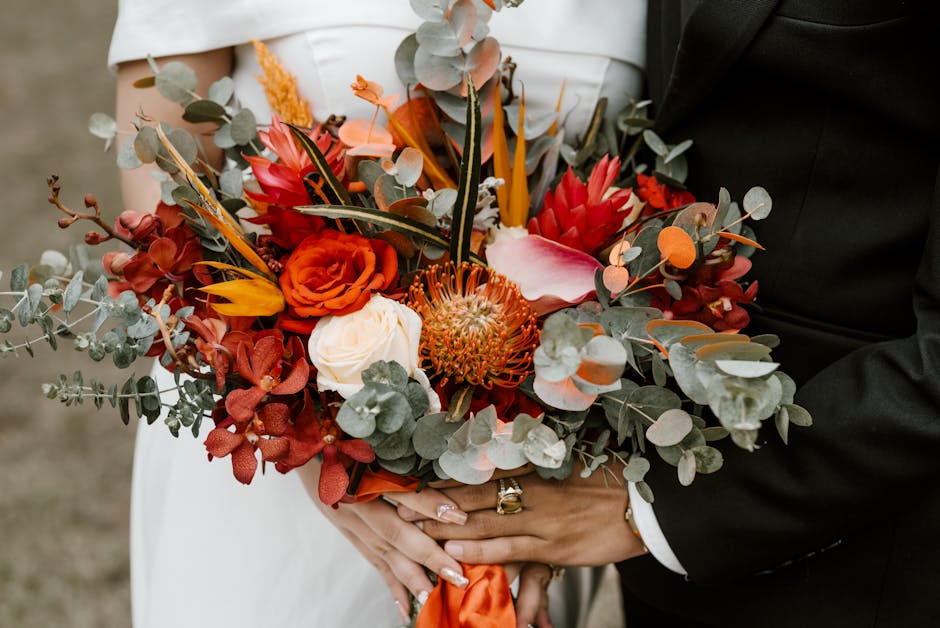
Hiring a florist means you bring in someone who can translate your style into actual arrangements, then handle much of the sourcing and technical detail. A florist will typically help you think through what flowers suit the season, the venue, the budget, and the scale of the day. That may include bridal bouquets, bridesmaids' flowers, boutonnieres, ceremony displays, aisle decor, table centrepieces, or larger focal pieces.
The real value is not just arranging stems prettily. It is judgement. A florist knows what holds up in a warm marquee, what looks elegant in candlelight, and what will still look fresh after a few hours of photos, hugs, and speeches. That is harder than it looks.
The middle ground many couples prefer
There is a useful hybrid approach that often gets overlooked. You do not have to choose all DIY or all professional. Some couples hire a florist for the bridal bouquet, key ceremony pieces, and statement arrangements, then DIY the simpler table flowers or bud vases. That can keep the day feeling polished without blowing the budget.
This is often the sweet spot for couples who want a personal touch but do not want the whole event dependent on family members with secateurs and a very full fridge.
Key Benefits and Practical Advantages
The strongest argument for either route is rarely one single factor. It is the combination of a few. If you lay them out clearly, the decision gets much easier.
Benefits of DIY wedding flowers
- Lower direct cost if you keep the design simple and the flower list restrained.
- Creative control over every stem, ribbon, and vessel.
- Personal involvement that can make the wedding feel even more yours.
- Flexibility if you want a relaxed, informal look rather than a highly structured floral design.
DIY can be especially appealing if you love hands-on planning and you are comfortable working with a limited range of blooms. Think simple jars, loose greenery, a few repeated flowers, and manageable quantities. Beautiful does not have to mean complicated.
Benefits of hiring a florist
- Less stress in the final days before the wedding.
- Better consistency across bouquets, ceremony flowers, and reception decor.
- Professional flower conditioning and handling for a fresher finish.
- Venue-aware design that fits scale, lighting, and layout.
- Faster problem-solving if the weather changes, the guest count changes, or the plan needs adjusting.
There is also a practical point about logistics. Flowers need timing. If you are already managing hair, transport, family arrivals, and supplier schedules, having a florist reduce one major moving part can be worth every penny. To be fair, peace of mind is not a luxury on a wedding morning. It is often the difference between calm and slightly unravelled.
If you want to compare service terms and payment expectations before deciding, pages such as payment information, returns and refund guidance, and the main about us page can help you understand how a professional flower business structures its service.
Who This Is For and When It Makes Sense
This topic is not only for couples with a tiny budget or a huge budget. It is for anyone trying to match floral ambition to real-life capacity. Here is the honest version.
DIY tends to make sense if you are:
- planning a small wedding or intimate reception
- happy to keep the design simple and repeated
- working with a reliable group of helpers
- comfortable accepting slight variation in the final look
- able to do prep a day or two before the event
Hiring a florist tends to make sense if you are:
- hosting a larger wedding with multiple floral touchpoints
- wanting a very polished, cohesive style
- using delicate blooms or complex arrangements
- short on time, storage space, or setup help
- getting married in a venue with strict access windows or setup rules
One couple may have the budget for professional flowers but still choose a few DIY extras for sentiment. Another may need the florist simply because their ceremony and reception are in different places and they do not want to coordinate two separate flower loads. Neither is more "right" than the other. The smartest choice is the one that fits the day you are actually planning, not the one in your head on a good, optimistic afternoon.
Step-by-Step Guidance
If you are still on the fence, use a practical process rather than guessing. It is much easier to decide when you can compare reality against the dream version.
- List every floral need. Include bouquets, buttonholes, ceremony pieces, reception tables, cake flowers, and any venue entrances or focal points.
- Mark each item as essential, nice-to-have, or optional. This gives you a budget filter straight away.
- Estimate the scale. A few bud vases are very different from a full arch, aisle run, and twelve table arrangements. Very different.
- Consider your time. Be realistic about work, family, travel, and pre-wedding admin.
- Think about setup access. If you only get into the venue at a narrow time slot, DIY becomes more stressful quickly.
- Check the flower season. Seasonal flowers are often easier to source and may be more cost-effective. Out-of-season requests can be done, but they may change the budget and look.
- Decide on a hybrid if needed. You can keep the big-impact arrangements professional and DIY the smaller decorative details.
- Build a buffer. If DIY, allow extra flowers, extra time, and extra help. Always extra. Flowers rarely behave like spreadsheets.
A useful rule of thumb: if the floral plan needs expert coordination to look good, hire the florist. If the floral plan can tolerate small inconsistencies and still feel beautiful, DIY may be enough.
Expert Tips for Better Results
Small decisions make a big difference with wedding flowers. This is where experience counts, because the visible part of the arrangement is only half the job.
- Choose fewer flower varieties. Repetition tends to look more elegant than a crowded mix of stems, especially in DIY arrangements.
- Prioritise structure first. Greenery, focal flowers, and size balance matter before you think about finishing touches.
- Keep flowers cool and hydrated. Warm rooms and direct sunlight can shorten vase life quickly.
- Match your ambition to your venue. A rustic barn, townhouse, hotel ballroom, and garden marquee all ask for slightly different styling.
- Test your bouquet size. A bouquet can look lovely in theory and feel uncomfortably large in the hand. That matters on the day.
- Ask about flower care after delivery. If you are using a florist, understand how to store and refresh the arrangements once they arrive. A little care goes a long way.
One practical tip that people forget: assign one person to flower duty on the wedding morning. Just one. Not everyone. Not a vague "someone will sort it." Pick a calm, organised person who knows where the buckets are, where the ribbon is, and what should happen if a buttonhole goes missing. That tiny bit of structure can save a lot of wandering around.
Common Mistakes to Avoid
The mistakes people make with wedding flowers are often not design mistakes. They are planning mistakes. Easy to make, annoying to fix.
- Underestimating the work. DIY flowers always take longer than expected, especially if you have never done a full set before.
- Buying too many different blooms. More variety can mean more waste, more confusion, and a less cohesive result.
- Ignoring transport. A beautiful arrangement can be damaged in one awkward car journey.
- Leaving setup to the last minute. Flowers need time to settle, be trimmed, and be placed properly.
- Choosing delicate flowers without a backup plan. Some blooms are gorgeous but more fragile than they look in photos.
- Forgetting the venue's rules. Some places have restrictions on candles, ladders, adhesives, or when suppliers can access the building.
- Not allowing for extras. A few spare stems and spare buttonholes can be a sanity-saver.
There is one more mistake that deserves its own mention: trying to copy a highly styled editorial look on a DIY budget without the time or team to support it. It is a classic trap. A mood board can be inspiring, but reality has bins, timing, and gravity.
Tools, Resources and Recommendations
You do not need fancy equipment to create decent wedding flowers, but you do need the right basics. If you are going DIY, gather the essentials early. If you are hiring a florist, use this list to understand what good preparation looks like.
Useful DIY tools
- sharp floristry scissors or secateurs
- clean buckets for conditioning flowers
- floral tape, ribbon, and sturdy pins
- vases, jars, or containers that fit your style
- cool storage space away from direct heat
- paper towels, spare water, and a protected working surface
Practical recommendations
- Keep the colour palette narrow if you want a more premium look.
- Choose flowers that can handle handling, transport, and a long event day.
- Ask suppliers clear questions about delivery timing and flower condition on arrival.
- Read the terms of service carefully so you know what happens if plans change.
If you are ordering flowers rather than arranging them yourself, it is worth checking how delivery and aftercare are handled. A sensible place to start is the florist's flower delivery information, along with their care advice and sustainability approach if those values matter to you.
Law, Compliance, Standards, or Best Practice
For wedding flowers, there usually is not a long list of special legal requirements for couples buying or arranging blooms. Still, a few best-practice areas matter, especially if you are working with a venue or supplier in the UK.
Venue rules matter. Some venues have their own policies about access times, storage, display materials, and whether items can be fixed to walls, floors, or furniture. That is not law, but it is still binding for the day. Always check it before you commit to a DIY plan that relies on hours of setup in the wrong place.
Supplier terms matter. If you hire a florist, read the booking terms, payment schedule, cancellation conditions, and refund policy properly. It sounds dull. It is dull. But it prevents disagreement later. Good providers should make these details clear, as well as how they handle deliveries and what support exists if something is not right.
Health and safety matter. This is mostly common sense: keep water off slippery floors, use ladders carefully, store tools safely, and do not block exits with decor. If you are using candles or installations near heat, be especially careful and follow the venue's instructions. Slightly boring? Yes. Important? Absolutely.
For many couples, best practice is simply this: agree the design early, confirm the delivery or collection timing, and make sure someone reliable is responsible for the flowers on the day. If you are buying from a florist, their public service pages such as terms and conditions, payment details, and returns and refunds should be easy to find and easy to understand.
Options, Methods, or Comparison Table
Here is a straightforward comparison to help you decide whether DIY, pro floristry, or a hybrid approach fits your wedding best.
| Approach | Best for | Pros | Watch out for |
|---|---|---|---|
| Full DIY | Small weddings, simple styling, confident planners | Lower direct spend, personal involvement, full creative control | Time pressure, transport issues, inconsistent finish, last-minute stress |
| Full florist | Larger weddings, complex designs, busy couples | Professional finish, less work, better coordination, support with logistics | Higher cost, less hands-on control, need to choose the right provider |
| Hybrid | Couples wanting balance between budget and polish | Focus spending on high-impact pieces, retain some personal input | Requires clear planning so the mix feels intentional, not pieced together |
If I had to reduce the whole decision to one sentence, it would be this: hire a florist for the parts of the day that you cannot afford to have wobble, and DIY only the parts that can absorb a bit of variation without the room losing its shape.
Case Study or Real-World Example
Imagine a couple planning a late-summer wedding in a village hall with a reception for 60 guests. They love flowers but are also juggling work, family visits, and a venue that only allows setup from 10am. At first they plan to DIY everything. Then they write out the tasks and realise the morning will involve collecting flowers, unloading, conditioning, arranging, and setting tables while half the wedding party is already getting ready nearby.
So they adjust. They hire a florist for the bouquet, buttonholes, and two statement arrangements for the ceremony and top table. They keep the rest simple with a few bud vases and greenery that a friend helps place the evening before. The end result still feels personal. The flowers look cohesive. No one is frantically trimming stems in a car park. That is the sort of compromise that often works best in real life.
And yes, there was still one slightly chaotic moment when a ribbon roll went missing. There always is. But the important bit is that the flowers were not the source of the stress. They were one of the things that made the day feel calm and lovely, which is really the point.
Practical Checklist
Use this checklist before you decide whether to DIY or hire a florist.
- Have you listed every floral item you actually need?
- Do you know your realistic budget, including extras?
- Will you have enough people to help on the day?
- Do you have a safe place to store flowers before setup?
- Does the venue allow the setup time your plan needs?
- Are your chosen flowers suitable for the season and conditions?
- Would a hybrid approach reduce stress without losing style?
- Have you checked delivery, payment, and policy details if using a florist?
- Do you have a backup plan if something runs late or gets damaged?
- Will your flower plan still feel good if it is slightly less perfect than the mood board?
If you can answer "yes" to most of these for DIY, you may be ready. If not, that does not mean you have failed at wedding planning. It probably means you have just identified where professional help would genuinely improve the day.
Get a free quote today and see how much you can save.
Conclusion
The question of DIY vs pro is really a question about priorities. Do you want to save money and enjoy the process of making your own flowers? Or would you rather protect your time, reduce pressure, and let a florist turn your ideas into something stable and beautiful?
There is no single correct answer, and that is the honest truth. DIY can be personal, memorable, and cost-conscious. Hiring a florist can be calmer, more polished, and far less risky when the day gets busy. The best decision is the one that fits your venue, your schedule, your taste, and the amount of energy you want to keep for the actual wedding. Not the flowers alone.
Whatever route you take, choose the version that lets you arrive at the ceremony with a steady breath and a clear head. That is worth a lot.
Frequently Asked Questions
How do I know if I should DIY my wedding flowers?
DIY makes sense if your floral design is fairly simple, your budget is tight, and you have enough help to set up safely and on time. If the plan is complicated or the wedding day is already packed, professional help is usually the calmer choice.
Is hiring a florist always more expensive than DIY?
Usually, yes, in direct cost terms. But DIY often has hidden costs such as extra stems, containers, tools, transport, and time. A florist may cost more upfront but can reduce waste, stress, and last-minute mistakes.
What wedding flowers are easiest to do yourself?
Simple bud vases, greenery-heavy table arrangements, and small informal bouquets are often the easiest DIY options. The more structured and delicate the design, the more likely it is to benefit from a professional touch.
When should I definitely hire a florist for my wedding?
If you want a large-scale floral installation, have a complex venue setup, need flowers across multiple locations, or simply do not want to be arranging stems the day before the wedding, hiring a florist is usually the better option.
Can I mix DIY flowers with professional flowers?
Yes, and many couples do. A hybrid approach can be very effective: hire a florist for the bouquet, ceremony focal points, or high-impact arrangements, then DIY the simpler pieces.
How far in advance should I book a wedding florist?
Earlier is usually better, especially for popular wedding dates. The exact timing depends on the provider and season, but giving yourself plenty of lead time makes planning easier and gives you more choice.
What should I ask a florist before booking?
Ask about design options, delivery timing, setup support, payment terms, cancellation conditions, and what happens if a flower variety is unavailable. It is also sensible to ask how they handle care before and during the event.
Are seasonal flowers better for weddings?
They often are. Seasonal flowers are usually easier to source, can look fresher, and may offer better value. They are not the only option, but they are often a smart starting point when planning your budget and design.
What is the biggest risk with DIY wedding flowers?
The biggest risk is usually time pressure. Flowers are time-sensitive, and if setup runs late or something gets damaged in transit, it can quickly affect the look and mood of the day.
How do I keep wedding flowers fresh for the day?
Keep them cool, hydrated, and out of direct sunlight as much as possible. Handle them gently, trim stems properly, and follow any care instructions provided by your florist or flower supplier.
Do I need a florist if I only want a bouquet and buttonholes?
Not necessarily. For small and simple requirements, DIY may be enough. But if you want a refined finish or have no time to assemble them, a florist can still be worthwhile even for a limited floral order.
How do I choose between budget and peace of mind?
Ask yourself what would hurt more on the day: spending a bit more, or dealing with floral stress while everything else is happening at once. If peace of mind matters most, a florist may be the better investment.
For any final service questions, it can also help to review the florist's public information pages such as contact details, company background, and practical policies before you commit. A little clarity now saves a lot of back-and-forth later.