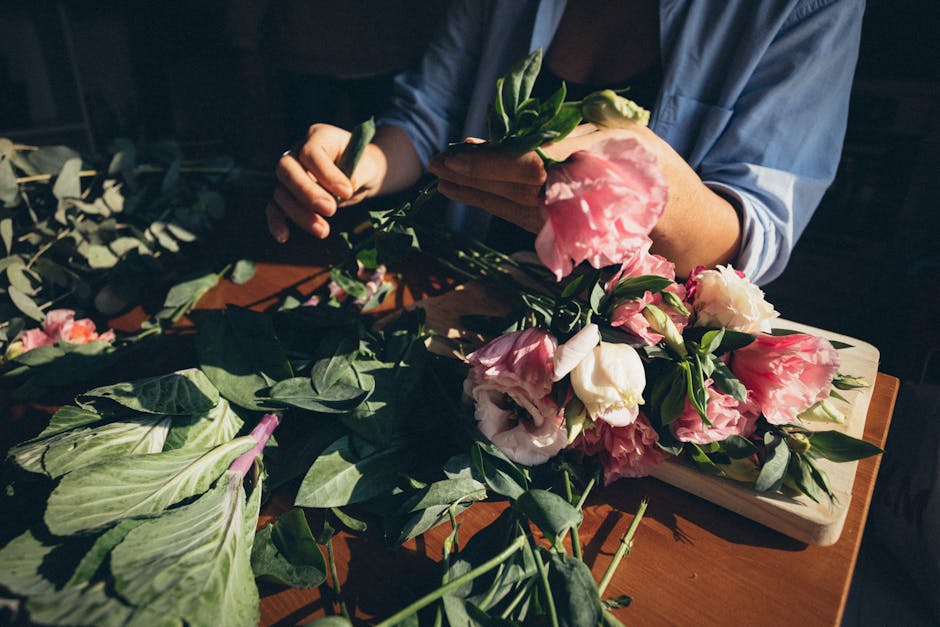
Florist Tips for Asymmetric Bouquet Arrangements
Asymmetric bouquets have a lovely way of looking effortless while actually being carefully designed. They feel fresh, modern, and a little more alive than a perfect round hand-tied. The best ones don't sit there looking over-managed; they lean, balance, and breathe. If you've ever wondered why one bouquet feels stylish and another just feels lopsided, this guide is for you.
In this article, you'll find practical Florist Tips for Asymmetric Bouquet Arrangements that cover design balance, stem selection, structure, colour, mechanics, and the small finishing details that make all the difference. Whether you're a florist refining your technique or a customer trying to understand what makes these arrangements work, you'll get clear, usable advice without the fluff.
For readers who also want to understand the service side of ordering flowers, pages like flower delivery options, flower care guidance, and the about us page are useful next stops. They help set expectations from the moment flowers leave the shop to the moment they reach the vase at home.
Table of Contents
- Why Florist Tips for Asymmetric Bouquet Arrangements Matters
- How Florist Tips for Asymmetric Bouquet Arrangements Works
- Key Benefits and Practical Advantages
- Who This Is For and When It Makes Sense
- Step-by-Step Guidance
- Expert Tips for Better Results
- Common Mistakes to Avoid
- Tools, Resources and Recommendations
- Law, Compliance, Standards, or Best Practice
- Options, Methods, or Comparison Table
- Case Study or Real-World Example
- Practical Checklist
- Conclusion
- Frequently Asked Questions
Why Florist Tips for Asymmetric Bouquet Arrangements Matters
Asymmetric bouquet design matters because it solves a very real problem: how to make flowers feel natural without making them look unplanned. A symmetrical bouquet can be beautiful, of course. But asymmetry gives florists more room to create movement, texture, and visual interest. It's the difference between a neat circle and a composition that seems to unfold as you look at it.
That matters in several settings. For weddings, an asymmetric bridal bouquet can echo an organic dress silhouette or soft, garden-style theme. For gifts, it can feel more personal and contemporary. For editorial work, shop displays, and event installations, asymmetry often photographs better because the eye travels through the arrangement instead of stopping at one central point. Truth be told, that sense of motion is often what people remember.
There's also a technical reason. Asymmetric bouquets teach a florist how to balance weight, line, and negative space. Once you get those right, your arrangements stop looking flat. You start designing with shape, not just flowers. And that shift changes everything.
For customers or businesses ordering frequently, especially for offices and receptions, it can be useful to look at corporate flower account services and think about how bouquet style affects brand image. A strong asymmetric arrangement can say a lot in a lobby, and rather quietly too.
How Florist Tips for Asymmetric Bouquet Arrangements Works
At its core, an asymmetric bouquet works by distributing visual weight unevenly while still feeling stable. One side may be longer, fuller, or more textured, while the opposite side gives space, lift, or a slimmer profile. The bouquet should not look accidental. It should feel intentionally off-centre.
Florists usually build this kind of arrangement around a few key ideas:
- Line: the direction your eye follows through the bouquet.
- Mass: the heavier, fuller parts that anchor the design.
- Space: the open areas that keep the bouquet from becoming crowded.
- Rhythm: repeated shapes, colours, or flower types that guide the viewer gently.
- Focal point: the area that draws attention first, usually off-centre rather than dead centre.
The trick is that asymmetry still needs structure. If the bouquet leans too far without support, it looks unfinished. If every stem is angled randomly, it looks confusing. A good florist uses stem mechanics, rotational thinking, and careful proportions so the bouquet feels alive but secure.
Many florists work in layers. They start with a framework of greenery or structural stems, then place larger blooms for the main body, and finally add smaller accents that extend the form. You can think of it like a conversation between the flowers: one group leads, another supports, and another softens the edges. A bit poetic, yes, but also true.
Key Benefits and Practical Advantages
There's a reason asymmetric floral design keeps showing up in modern bouquets and event work. It offers practical and visual benefits that make it useful beyond trend-driven styling.
1. It feels modern without being cold
Symmetry can sometimes feel formal or traditional. Asymmetry tends to feel more editorial, more relaxed, and more current. That doesn't mean it's trendy in a disposable way. It just gives florists room to create something that feels less predictable.
2. It lets different flower shapes shine
Some flowers naturally suit asymmetrical design: orchids, ranunculus, clematis, sweet peas, anemones, roses with longer side stems, and airy seasonal stems like ammi or wispy grasses. The composition can highlight different textures instead of forcing everything into a neat round shape.
3. It can suit awkward stem combinations
Not every batch of flowers arrives perfectly matched. Seasonal floristry often means working with varied lengths, sizes, and openings. Asymmetry can turn that into an advantage rather than a nuisance. One slightly dramatic stem on the left? Fine. Let it lead.
4. It photographs beautifully
For weddings, branding, and online listings, bouquets with movement often look better on camera. The angle, line, and negative space create depth. That matters if your flowers are meant to be seen on a website, in a social feed, or in a client's memory.
5. It encourages better floristry technique
Designing asymmetrically forces you to improve your eye for proportion and stability. That's a useful skill whether you're arranging a hand-tied posy, a sympathy tribute, or a statement arrangement for a hotel desk.
Expert summary: Asymmetric bouquets work best when the florist balances freedom with control. The arrangement should feel spontaneous, but every stem still has a job.
Who This Is For and When It Makes Sense
This approach is useful for a wide range of people, though it's especially valuable if you care about design detail. To be fair, that includes more people than you might think.
- Professional florists who want to improve composition and offer more contemporary styles.
- Bridal clients looking for something elegant but less rigid than a classic round bouquet.
- Event planners creating modern tablescapes, entrance designs, or styled installations.
- Gifting customers who want flowers that feel thoughtful and distinctive.
- Retail florists who need bouquet options that stand out in photos and window displays.
Asymmetric design makes particular sense when the setting is informal, creative, seasonal, or visually led. It's often a good fit for spring and summer flowers, textural foliage, or mixed-color palettes. It can also work beautifully for sympathy flowers, though the tone should be handled with restraint and care. A very bold asymmetrical piece can feel inappropriate in the wrong context, so judgement matters.
If you're arranging flowers for delivery rather than in person, it helps to review practical support pages like delivery information, returns and refund details, and service guarantees. These details may seem separate from design, but they shape the customer's overall experience.
Step-by-Step Guidance
Here's a practical way to build an asymmetric bouquet without it tipping into chaos. It's not the only method, but it's a reliable one.
Step 1: Choose your focal idea
Start with a decision. Is the bouquet going to feel airy and delicate, bold and sculptural, or soft and romantic? One clear direction prevents the arrangement from becoming a random mix of pretty stems. A bouquet without a design idea is basically a shopping basket with ambition.
Step 2: Select a dominant flower
Pick one bloom that will anchor the composition. This could be a large rose, peony, dahlia, hydrangea, or another standout flower. Place it slightly off-centre rather than in the middle. That off-centre position is often what gives the bouquet its life.
Step 3: Add support stems
Build around the focal bloom using flowers or foliage that vary in size and texture. These should support the shape without competing too strongly. Think of them as the quiet structure behind the main note.
Step 4: Create one stronger side
Choose a direction for the bouquet to lean. One side may be longer, looser, or more textured. The other side can be shorter, tighter, or visually lighter. The key is that the stronger side needs counterbalance, not a mirror image.
Step 5: Use negative space deliberately
Leave some open space. This is where many bouquets go wrong. If every gap is filled, the arrangement loses shape and the eye has nowhere to rest. Space is not empty in the bad sense; it's part of the design.
Step 6: Check the silhouette from all sides
Turn the bouquet as you work. Look at it front-on, then slightly from the side. Make sure the line feels intentional. Many florists stand back for a moment, squint a little, then move one stem just half an inch. That half inch can do a lot.
Step 7: Finish with texture and movement
Add lighter elements such as delicate foliage, grasses, or small blooms to soften the edge. These details help the bouquet feel effortless. A touch of movement is usually better than too much perfection.
Step 8: Secure the mechanics
Use binding, tape, or wrapping techniques suited to the bouquet style. Asymmetric arrangements can shift if the stems are not secured properly. The outer beauty means little if the structure gives way halfway to the van. Not ideal.
Expert Tips for Better Results
A few practical habits make a noticeable difference. These are the kinds of details that separate a decent bouquet from one that feels considered.
- Work with stem lengths intentionally. Don't trim everything to the same level. Variation helps create visual flow.
- Use odd numbers where it feels natural. Three, five, or seven focal stems can look more organic than even groupings.
- Balance heaviness with air. If one side has big blooms, the opposite side often needs lighter texture rather than more volume.
- Let one element lead. A bouquet with too many focal points can feel indecisive.
- Keep the palette controlled. Asymmetry does not mean visual noise. Two or three core colour families are often enough.
- Mind the vase or wrapping shape. A bouquet may look beautiful in the hand but awkward once placed. Think ahead.
One useful florist habit is to step away for ten seconds and come back with fresh eyes. The arrangement often tells you immediately what is wrong. Sometimes it needs more lift; sometimes it just needs one stem removed. That's the quiet part of the job, really.
If you want flowers that are arranged and delivered with a strong eye for presentation, the flower delivery service and the business's sustainability approach are both worth reviewing. Design and sourcing are more connected than people think.
Common Mistakes to Avoid
Most problems with asymmetric bouquets come from overcorrecting. People either make them too symmetrical out of caution, or too wild because they think asymmetry means freedom from rules. Neither works particularly well.
Making the bouquet lopsided instead of balanced
A bouquet can lean and still be balanced. If one side feels like it's about to fall over, the arrangement has gone too far. Asymmetry should look deliberate, not unstable.
Overfilling the negative space
That open area is doing a lot of work. If you pack it with filler flowers just because you can, the bouquet loses the clarity that makes asymmetry effective.
Using flowers with equal visual weight everywhere
If every stem is equally bold, the arrangement can feel heavy and flat. Good asymmetry usually means varying size, texture, and opacity.
Ignoring the bouquet's viewing angle
Some arrangements are meant to be seen from one strong front angle; others need 360-degree interest. Decide that early, otherwise the design may not read correctly.
Forgetting transport and handling
A bouquet that looks perfect on the bench can shift in delivery. Stems settle, petals bruise, and wrapping can compress the shape. If you're sending flowers out, especially in warmer weather, practical handling matters as much as the design itself.
For service details and customer reassurance, it's sensible to check payment information and the shop's terms and conditions. Not glamorous, perhaps, but part of a dependable buying experience.
Tools, Resources and Recommendations
You do not need a complicated toolkit to make good asymmetric bouquets. Still, a few items make the process smoother and more reliable.
| Tool or Resource | Why It Helps | Best Use |
|---|---|---|
| Sharp florist scissors or snips | Clean cuts help stems drink properly and keep the finish neat | Trimming stems before arranging |
| Binding tape or twine | Keeps the bouquet secure while preserving the intended shape | Hand-tied bouquets and gift arrangements |
| Florist knife | Useful for precision trimming, especially on tougher stems | Detailed work and structural adjustments |
| Clean bucket of water | Keeps flowers fresh during staging and selection | Prep before arrangement |
| Mirror or phone camera | Helps you see imbalance more clearly from a different perspective | Checking silhouette and flow |
| Good-quality foliage | Creates movement, depth, and a softer edge | Structural support and finishing |
As for resources, a solid florist also pays attention to care guidance after the bouquet leaves the shop. A customer may love the shape on arrival, but keeping it fresh is the next challenge. The flower care page is a relevant follow-up for exactly that reason.
If you are ordering for a business or recurring client, consider whether a consistent style guide should include asymmetric options for reception flowers or event displays. That kind of consistency saves time and avoids last-minute decisions. A little boring maybe, but very useful.
Law, Compliance, Standards, or Best Practice
For bouquet design itself, there is no special legal rule about asymmetry. Still, florists in the UK should pay attention to the wider standards that affect retail and delivery. In practice, that means being clear about what is being sold, what care is required, and what happens if an order arrives damaged or delayed.
Good best practice includes:
- describing bouquet style honestly in product listings
- setting realistic expectations about flower substitutions when seasonal stems are used
- providing straightforward care and handling instructions
- being clear about delivery windows and any limitations
- keeping refund and return policies easy to understand
That level of clarity is not just customer service; it reduces avoidable problems. If a bouquet is designed asymmetrically, it helps to explain that in the listing or consultation so the customer understands it is intentionally shaped rather than "a bit uneven." Small wording choices matter.
For trust and transparency, visitors may also want to review pages such as privacy policy, accessibility statement, and modern slavery statement. These do not affect bouquet design directly, but they support a responsible and professional business image.
Options, Methods, or Comparison Table
Asymmetric bouquets are not one single style. There are several ways to interpret the idea, and the right choice depends on the occasion, flower availability, and the effect you want.
| Style | Look and Feel | Best For | Trade-Off |
|---|---|---|---|
| Soft garden asymmetry | Loose, romantic, airy | Weddings, gifting, spring florals | Can look messy if overworked |
| Sculptural asymmetry | Strong lines, dramatic shape | Editorial work, modern interiors | Needs careful structural control |
| Textural asymmetry | Mix of foliage, berries, smaller blooms | Seasonal arrangements, natural themes | Can feel busy without restraint |
| Minimal asymmetry | Few stems, lots of space | Premium gifts, contemporary styling | Every stem has to be chosen carefully |
If you're deciding between these methods, ask a simple question: do you want the bouquet to feel abundant, architectural, or quietly elegant? That answer will usually point you in the right direction.
Case Study or Real-World Example
Imagine a spring bouquet for a boutique office reception in London. The client wants something welcoming, not too formal, and slightly more memorable than the standard round arrangement. A florist might choose pale roses, tulips, and delicate seasonal foliage, then build an arrangement that rises higher on one side and opens more loosely on the other.
The main blooms sit just off-centre. A line of tulips draws the eye upward. Fine foliage extends outward with a soft bend, almost like the bouquet has been caught mid-breath. The final result feels fresh as the front door opens at 8:30 on a grey weekday morning. That little lift matters.
Now compare that with a sympathy bouquet. The same asymmetrical principle may still work, but the palette would likely be more restrained. Whites, soft greens, or muted blush tones could be placed with less movement and more calm. The design is still asymmetrical, but the tone is quieter. That's the real skill: adapting the structure without losing sensitivity.
In our experience, clients often say they want "something different" but don't always know what that means. Asymmetry gives a florist a helpful answer. It feels intentional, distinctive, and current without shouting for attention.
Practical Checklist
Use this checklist before you finish an asymmetric bouquet.
- Is there a clear focal point, slightly off-centre?
- Does one side lead more strongly without looking unstable?
- Have you left enough negative space for the shape to read clearly?
- Are the flower sizes and textures varied rather than repetitive?
- Does the colour palette feel controlled?
- Have you checked the bouquet from more than one angle?
- Are the stems secured well enough for handling or delivery?
- Does the bouquet suit the occasion and tone of the client request?
- Have you trimmed any distracting stems that weaken the silhouette?
- Would the arrangement still look good after a short journey?
Quick takeaway: If the bouquet feels interesting but not fussy, balanced but not mirrored, you're probably in the right zone.
Conclusion
Asymmetric bouquet design is not about breaking the rules for the sake of it. It's about using shape, texture, and space more thoughtfully so the flowers feel expressive and grounded at the same time. Once you understand the basics, the style becomes surprisingly flexible. It can be soft, bold, minimal, romantic, or modern depending on the flowers and the intent behind them.
For florists, these techniques build real design confidence. For customers, they help explain why one bouquet feels special while another feels simply neat. And for businesses, they can strengthen presentation across gifts, events, and everyday deliveries. A good bouquet should do more than sit prettily in a vase; it should have presence.
If you are ready to order, refine a product range, or simply talk through a style that suits your needs, start with the most relevant service pages and make sure the practical details are clear too. A beautiful arrangement is only part of the experience. The rest is care, communication, and follow-through.
Get a free quote today and see how much you can save.
Sometimes the best floral designs are the ones that leave a little room to breathe. That's where the charm lives, honestly.
Frequently Asked Questions
What is an asymmetric bouquet arrangement?
An asymmetric bouquet arrangement is a floral design that is intentionally unbalanced in shape, with one side, line, or focal area carrying more visual weight than the other. It still needs structure, though. The goal is to look natural and intentional, not uneven by accident.
Why do florists use asymmetry in bouquets?
Florists use asymmetry to create movement, depth, and a more contemporary feel. It helps bouquets look less formal and more expressive, which is especially useful for weddings, gifts, events, and editorial-style floral work.
Which flowers work best for an asymmetric bouquet?
Flowers with different sizes, textures, and stem lengths work especially well. Roses, peonies, ranunculus, orchids, tulips, anemones, sweet peas, and textural foliage are all common choices. Seasonal variation often adds character too.
Is an asymmetric bouquet harder to make than a round one?
Usually, yes. It takes a better eye for balance because you cannot rely on symmetry to hide weak structure. That said, once you understand line and proportion, it becomes very manageable, and often more creative.
How do you stop an asymmetric bouquet from looking lopsided?
Use an intentional focal point, balance the heavier side with lighter texture or open space, and check the bouquet from multiple angles. If it feels like it could tip over visually, reduce the weight on the dominant side or add a subtle counterpoint.
Can asymmetric bouquets be used for weddings?
Absolutely. They are popular for bridal bouquets, table arrangements, and venue styling because they feel modern and romantic. The key is matching the level of asymmetry to the overall wedding style so it still feels cohesive.
Do asymmetric bouquets cost more?
They can, but not always. Price depends more on flower choice, seasonality, size, and labour than on the shape alone. Some asymmetric designs are simple to build, while others require more skilled handling and premium stems.
How long do asymmetric bouquets last?
The shape does not affect vase life directly, but the flowers and care routine do. Clean cuts, fresh water, and proper handling all matter. Following good flower care guidance will usually make the biggest difference.
Should asymmetric bouquets be wrapped differently?
Often, yes. The wrap or presentation should support the direction of the bouquet rather than flatten it. A thoughtful wrap can protect the shape during delivery while still letting the design show through.
Can I request a custom asymmetric bouquet for delivery?
Yes, many florists can create bespoke arrangements if you give them a clear brief. It helps to mention the occasion, preferred colours, and whether you want something soft, dramatic, or minimal. If you need delivery details, check the shop's delivery information first.
What is the biggest mistake people make with asymmetrical flowers?
The most common mistake is confusing asymmetry with randomness. A good arrangement still has balance, rhythm, and a focal point. Without those, the bouquet can look unfinished rather than stylish.
How do I choose between a symmetrical and asymmetric bouquet?
Choose symmetrical for a classic, formal, or traditional feel. Choose asymmetric if you want movement, modern character, or a more natural look. If you are unsure, think about the setting first, then the flowers. That usually makes the choice easier.
For more practical support, it can also help to review the shop's contact page if you want advice before placing an order. A quick conversation often saves a lot of guesswork later.