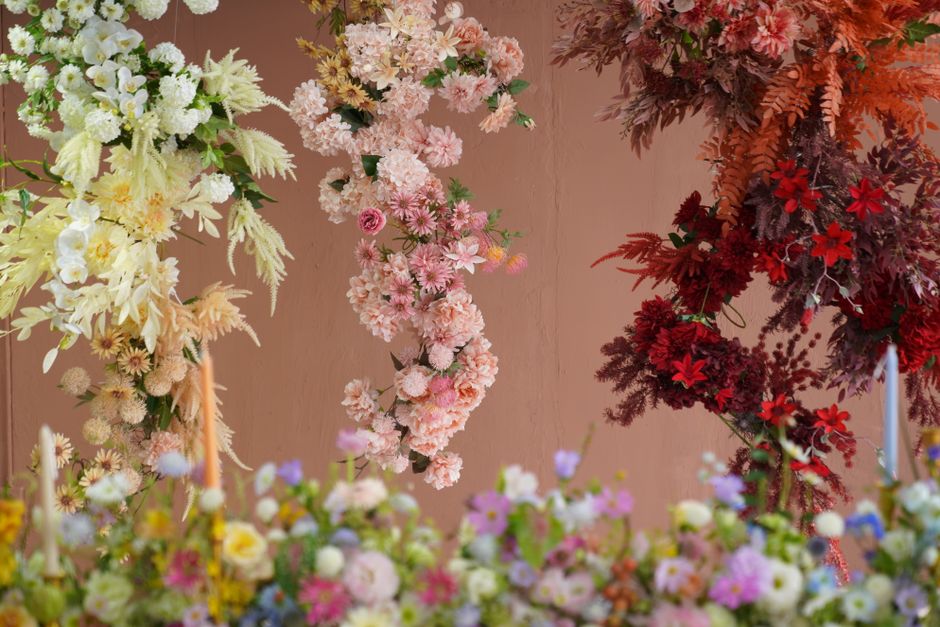
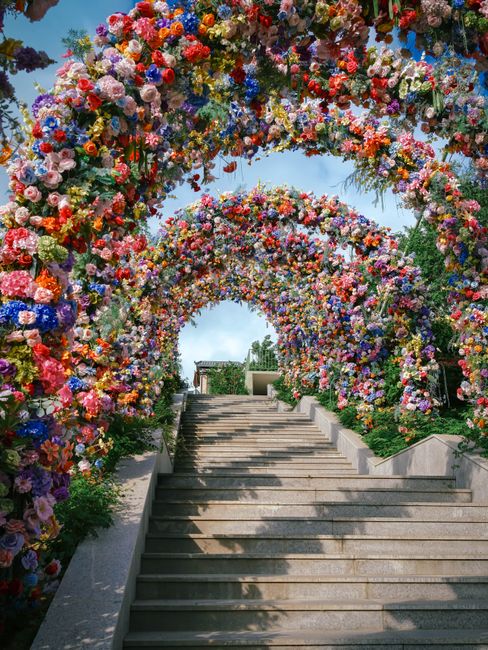
How Professionals Build Safe Large-Scale Floral Installations
Large floral installations can stop people in their tracks. A hotel lobby arch, a wedding ceiling meadow, a branded event wall, a shopfront cascade - done well, it feels effortless. Done badly, it can become a safety headache very quickly. That is why How Professionals Build Safe Large-Scale Floral Installations is really about more than flowers. It is about structure, load, fire awareness, venue rules, access, timing, and a calm, methodical process that keeps people safe while the design still looks magical.
If you have ever looked at a huge floral display and wondered how it stays put, how it gets installed without chaos, or why the finished result looks so polished, you are in the right place. This guide walks through the practical thinking behind safe floral builds, from planning and materials to compliance, checks, and common mistakes. Truth be told, the beautiful part is usually the easy bit. The safe part is where the real expertise lives.
For teams planning corporate events, launches, weddings, hospitality displays, or seasonal installations, a structured approach matters. If you are also organising broader floral services around the project, pages like flower delivery and corporate accounts can help with the practical side of sourcing and repeat ordering.
Table of Contents
- Why safe large-scale floral installations matter
- How the installation process works
- Key benefits and practical advantages
- Who this is for and when it makes sense
- Step-by-step guidance
- Expert tips for better results
- Common mistakes to avoid
- Tools, resources and recommendations
- Law, compliance, standards and best practice
- Options, methods and comparison table
- Case study or real-world example
- Practical checklist
- Conclusion
- Frequently asked questions
Why safe large-scale floral installations matter
Large floral work changes a space. It changes sightlines, access routes, ceiling loads, and sometimes even how people move through a room. That is why safety cannot be an afterthought. A floral canopy that looks weightless may still place real stress on fixing points. A hanging installation may be stunning at 7 a.m. and a problem by 7 p.m. if condensation, heat, or poor anchoring is ignored.
Professionals treat every installation as a small project with its own risk profile. They ask practical questions: Where is the weight going? Who will be under it? What happens if the venue gets warm? Is there a sprinkler system overhead? Can the structure be installed without damaging the property? Those questions sound unglamorous, but they are what protect the guest experience.
In busy venues, safety also affects speed. A well-planned installation can be built efficiently with fewer surprises, fewer last-minute changes, and fewer people walking back and forth with "just one more adjustment". Let's face it, nobody wants that on event day.
Expert summary: Safe large-scale floral installations are built on three things: sound structure, sensible materials, and disciplined on-site process. The final design only works if all three are respected.
How safe large-scale floral installations work
At a professional level, a large floral installation is usually built in layers. First comes the concept and site review. Then comes the support system, then the floral mechanics, then the finish. Each stage affects the next. Skip one, and the whole thing can wobble - literally or visually.
1. The concept is translated into a buildable plan
The designer or florist does not just sketch a beautiful shape. They determine how it will be held, where it will be installed, and how it will survive the event window. A dense floral cloud, for example, needs different support from a linear table runner or a freestanding branded wall.
2. The venue is assessed before anything is fixed in place
Professionals look at access, ceiling height, weight limits, wall type, lighting, fire equipment, and anything else that could affect the build. A charming old London venue with ornate finishes may need a gentler fixing method than a modern event space. The building itself becomes part of the brief.
3. The structure is selected first, flowers second
This is a big one. People often imagine the flowers are the main thing, but in installation work the structure carries the design. Depending on the project, that might be truss, a frame, discreet rigging, weighted bases, panels, grids, or a custom-built backing. The floral material then sits on top, around, or through that base.
4. Freshness and mechanics are planned together
Flowers need water, hydration support, or at least a sensible method of keeping them looking good for the event window. If the floral mechanic traps too much weight or moisture in the wrong place, it can affect stability. In warmer rooms, smaller sections may be smarter than one giant assembly. Professionals think about the whole life of the installation, not just the moment the ladder comes down.
5. Installation happens in a controlled sequence
Good teams work from base to finish, checking alignment, stability, and visual balance as they go. They do not rush the delicate parts. They also know when to stop and step back. A lot of strong installation work is simply knowing when enough is enough, which sounds obvious, but in the middle of a live build it is surprisingly easy to forget.
Key benefits and practical advantages
Safe large-scale floral installations do more than prevent problems. They improve the whole experience for clients, guests, and venue staff. A sturdy, well-planned build tends to look better too, because it is cleaner, more symmetrical, and less frantic at the edges.
- Better visual consistency: When the structure is secure, designers can focus on shape, texture, and spacing rather than emergency fixes.
- Lower event-day risk: Fewer surprises mean fewer delays and less stress for everyone involved.
- Cleaner venue handover: Good installations are easier to remove without damage, staining, or residue.
- Longer usable lifespan: Properly supported flowers and mechanics often last better over the full event period.
- More ambitious design freedom: Safe engineering opens the door to bigger, more creative floral statements.
There is also a commercial benefit that people sometimes overlook: confidence. A planner or client who sees a careful, professional approach is much more likely to trust the team with future work. That trust matters, especially in corporate environments where repeat standards are everything.
Who this is for and when it makes sense
Not every floral arrangement needs a structural plan detailed enough to make an engineer nod approvingly. But large-scale installations absolutely do. If your design is touching ceilings, spanning rooms, hanging above people, or covering big surfaces, it makes sense to build it professionally.
This is particularly relevant for:
- wedding planners managing dramatic ceremony backdrops or ceilings
- event producers working in hotels, halls, marquees, or exhibition spaces
- brand teams planning launches, press moments, and seasonal activations
- hotels, restaurants, and retailers refreshing public areas with statement florals
- corporate clients who need repeatable, on-brand floral presentation
If you are in a business setting, consistency often matters as much as creativity. A lobby installation may need to look elegant on Monday morning, still be fresh on Wednesday, and be removed without disruption. That is a different job from a one-night bouquet, and it should be treated that way.
For businesses that need regular ordering, policy clarity, and smoother procurement, the support pages on about the company, payment, delivery information, and returns and refunds can be useful when shaping expectations and admin.
Step-by-step guidance
Here is the practical flow professionals usually follow. Not every project looks identical, of course, but the logic is fairly consistent.
Step 1: Define the brief properly
Start with purpose, placement, audience, budget, timing, and duration. A floral installation for a press launch in daylight behaves differently from one in a dim reception space. Ask what the client wants people to feel. Big? Luxurious? Seasonal? Quietly expensive? The answer affects scale and texture more than many people realise.
Step 2: Survey the site
Measure the space and inspect the surfaces. Check access routes for delivery and build-in. Look at the ceiling, walls, columns, flooring, and any fixed features that cannot be touched. If the venue has restrictions, get them early. It is much easier to design around a limitation before the flowers arrive.
Step 3: Choose the installation method
Decide whether the design will be freestanding, wall-mounted, suspended, or layered over an existing structure. Each method has strengths and drawbacks. A freestanding piece may be easier to remove. A suspended piece may feel more dramatic. A wall-mounted piece may be better for tight venues. The right answer depends on the room, not just the mood board.
Step 4: Build the support structure
This is the safety backbone. It might involve frames, weighted bases, rigging, brackets, floral foam alternatives, mesh, cable systems, or custom panels. The aim is stable support with minimal visible bulk. The support should be strong enough for the finished weight and any movement that may happen as guests pass by or doors open and close.
Step 5: Prepare the flowers and foliage
Flowers should be conditioned correctly, hydrated where needed, and sorted by shape and longevity. Large installations often look best when they mix focal flowers, supporting blooms, foliage, and textural elements. Professionals also think about what will wilt first. A front-facing rose wall may need a different internal balance from a mixed greenery canopy.
Step 6: Assemble in sections
Most large pieces are safer and easier to handle in modules. Build the components separately, test them, and then join them on site. This reduces the chance of damage and makes transport less awkward. It also gives the team more control over symmetry. Nobody likes discovering a lopsided panel at the exact moment the venue manager appears with a stopwatch expression.
Step 7: Install with safety checks at each stage
Once the structure is in place, professionals check fixings, balance, visibility, and clearance. They look underneath as well as from the front. Hidden issues are common: a slightly loose tie, a sagging edge, a flower cluster that pulls the balance to one side. Small corrections early save big trouble later.
Step 8: Finish, photograph, and brief the client
After the visual finish is complete, the team should explain any care needs, access limitations, or touch-up windows. If the installation will remain in place for more than a short event, the client should know what to expect as flowers age naturally. This part is easy to skip when everyone is tired, but it matters. A five-minute handover can prevent a lot of confusion.
Expert tips for better results
A few small choices can make a large difference to safety and finish. These are the habits experienced teams tend to rely on.
- Design around gravity, not against it. If a form looks unstable on paper, it usually will be unstable in a room.
- Keep load distribution even. Heavy clusters should be balanced, especially on suspended work.
- Use materials suited to the event length. Short events and multi-day installations do not need the same hydration strategy.
- Allow for venue airflow. Air conditioning, open doors, and warm lighting can affect freshness more than people expect.
- Plan for removal from day one. A safe install is also a safe take-down.
- Document the build sequence. Photos and notes are incredibly helpful if a piece needs adjusting or recreating.
One small but underrated trick: walk away from the piece for five minutes and come back. The mind settles, and you spot balance issues more clearly. It sounds almost too simple. It works.
And if the client wants a sustainable angle, it is worth considering material choices carefully. The page on sustainability can help set expectations around more responsible sourcing and decision-making, even if the exact design still depends on the brief.
Common mistakes to avoid
Most installation problems come from rushing, under-planning, or assuming the venue will be more forgiving than it really is. Here are the issues professionals try to avoid.
- Underestimating weight: Fresh flowers, water, wet mechanics, and structure add up quickly.
- Ignoring venue rules: Hanging points, wall surfaces, fire systems, and load restrictions need checking before build day.
- Designing only for the front view: Guests may see the piece from every angle, not just the camera angle.
- Using the wrong fixings: A temporary event need still deserves proper anchoring and compatible materials.
- Not allowing for transport damage: Large floral work can shift, bruise, or compress in transit.
- Leaving no margin for touch-ups: Small breakages happen. There should always be a plan for them.
Another common one is overfilling. More is not always better. A floral installation can become heavy, visually crowded, and harder to keep stable if every gap is stuffed without thought. Breathing space is part of the design. Not a flaw.
Tools, resources and recommendations
Professionals usually rely on a mix of design tools, measuring equipment, and installation hardware. The exact kit depends on the method, but the same principle applies: choose the right tool for the task, not the one nearest the van door.
| Category | Typical use | Why it matters |
|---|---|---|
| Measuring tools | Tape measures, laser measures, marked templates | Helps ensure fit, symmetry, and clearance |
| Support hardware | Frames, bases, rigging components, cable ties, hooks, brackets | Provides structural stability |
| Floral mechanics | Mesh, water sources, secured holders, absorbent materials | Keeps flowers positioned and hydrated where needed |
| Conditioning supplies | Clean buckets, cutters, transport containers, hydration aids | Preserves flower quality before and during build |
| Safety equipment | Gloves, steps, ladders, protective packing, fixings checks | Supports safe handling and installation |
For customer-facing planning, it also helps to keep a clear set of policies and service information close at hand. Pages such as guarantees, flower care, and contact us are the kind of practical references that make a project easier to manage when time is tight.
If you are organising on behalf of a business, you may also want to review administrative pages like terms and conditions and accessibility statement. They do not build the installation, but they do help with trust and clarity. Which, honestly, saves a lot of back-and-forth later.
Law, compliance, standards and best practice
Large floral installations often sit at the edge of event design, temporary display, and venue operations. That means legal and safety expectations can vary by location and context. In the UK, the safest approach is to follow venue requirements, use competent installers, and treat the space as a shared environment where guests, staff, and contractors all need protecting.
Good practice usually includes:
- checking venue-specific restrictions before design sign-off
- confirming who is responsible for fixing points and load-bearing elements
- making sure the installation does not interfere with fire exits, alarms, sprinkler heads, or emergency access
- using materials and methods suitable for the intended duration
- carrying out a sensible risk assessment for the build and take-down phases
- briefing the venue or event lead on any residual risks or care requirements
It is also wise to keep documentation simple and accessible. Site notes, dimensions, sign-off confirmations, and removal instructions help everyone. No one wants to be guessing at 10:30 pm with a ladder in hand and a room full of guests waiting for speeches.
Because installations may involve public spaces, customer privacy and operational terms can matter too. If you are arranging work through a business account or handling client details, useful housekeeping pages include privacy policy and cookie policy.
Options, methods and comparison table
There is no single "best" way to build a large floral installation. The right method depends on the venue, the desired look, and how long the display needs to last. Here is a simple comparison.
| Method | Best for | Strengths | Trade-offs |
|---|---|---|---|
| Freestanding structure | Entrances, stage areas, open floor plans | Flexible, often easier to remove, minimal impact on walls | Can take up floor space and needs stable weighting |
| Suspended installation | Ceilings, dramatic overhead features, wide visual impact | Feels light and immersive, strong visual payoff | Needs careful load checking and venue approval |
| Wall-mounted feature | Backdrops, branding walls, photo moments | Space-efficient, strong camera presence | Depends on wall surfaces and fixing compatibility |
| Table-based or surface build | Dining events, reception tables, product launches | Intimate, practical, easier to control | Less dramatic if the room needs a big statement |
A thoughtful professional will not default to the most impressive-looking option. They will choose the one that works with the room, the event flow, and the safety constraints. That is usually where the best results come from anyway.
Case study or real-world example
Imagine a spring evening launch in a central London venue with a high ceiling, active foot traffic, and a branded photo wall near the entrance. The client wants something memorable but not clumsy. Not too much, not too little. The team starts by measuring the wall area, checking access for setup before doors open, and confirming that the finish will not interfere with lighting or signage.
Instead of building one enormous piece on site, the floral team prepares three modular sections. Each section is balanced on its own, tested on the ground, and then fixed into place with the support system already planned. The flowers are hydrated in advance, sorted by head size, and arranged so the heavier material sits lower and closer to the frame. Small gaps are left where airflow is strongest. The final effect is full, elegant, and secure.
During the evening, a guest brushes past the edge of the display and nothing shifts. That sounds basic, but it is the point. The installation looks soft and abundant because the hidden structure was handled properly. Later, the team removes it cleanly, leaving the venue as it was found. No drama. Just a good job.
That is really the measure of safe installation work: the client remembers the beauty, while the venue remembers the professionalism.
Practical checklist
Use this checklist before any large floral build. It is simple, but it catches a lot.
- Brief confirmed, including purpose, scale, and duration
- Venue dimensions measured and access routes checked
- Load-bearing points or standing support plan confirmed
- Fire exits, sprinklers, signage, and lighting reviewed
- Materials selected for weight, freshness, and finish
- Modules or sections planned for transport and installation
- Tools, fixings, and backup materials packed
- Build sequence agreed with the team
- Risk points identified for install and take-down
- Client handover notes prepared
- Removal plan and timing confirmed
Practical takeaway: if you can explain how the installation is supported, how it is watered or preserved, how it is fixed, and how it comes down, you are already thinking like a professional.
Conclusion
Large floral installations look effortless when they are done right, but behind that softness is a disciplined process. The safest and strongest results come from good planning, sensible materials, careful support, and a calm build sequence. That is what separates a pretty display from a truly professional one.
If you are planning a major floral feature, start with the venue realities first and the styling second. It may feel less exciting for a moment, yet it pays off in the end. Better safety, better finish, fewer surprises. And honestly, fewer surprises are a gift on event day.
Get a free quote today and see how much you can save.
Frequently Asked Questions
How do professionals make large floral installations safe?
They begin with the structure, not the flowers. That means checking the venue, selecting stable support, balancing weight properly, and building in sections where needed. They also plan for installation, event duration, and removal, so the piece stays secure from start to finish.
What is the biggest risk with large floral displays?
The biggest risk is usually underestimating weight or ignoring the venue conditions. Heat, airflow, hanging height, and fixing points all matter. A design that looks light on paper can be surprisingly heavy once flowers, water, and mechanics are added.
Do all large floral installations need a risk assessment?
In practice, yes, a sensible risk assessment is a very good idea. For public venues and event spaces, professionals normally review access, overhead hazards, fire safety concerns, and removal procedures before the build goes ahead.
How long does a large floral installation take to build?
It depends on size, access, and complexity. A simple branded wall may take much less time than a suspended ceiling installation with modular sections. The main point is that good work is planned to fit the venue schedule, not squeezed into the last possible minute.
What materials are best for safe floral structures?
That depends on the design. Professionals may use frames, weighted bases, panels, mesh, cable systems, or custom supports. The best material is the one that gives the required stability without making the installation unnecessarily bulky or awkward to remove.
Can floral installations be hung from ceilings in any venue?
No. Ceiling installations depend on the venue's structure, approval process, and suitable fixing points. Some spaces allow it, some do not, and some need very specific methods. Always confirm the venue's rules before the design is finalised.
How do florists keep large installations fresh?
They condition flowers properly, use suitable hydration methods, choose varieties with enough life for the event, and manage the timing of the build. In warmer spaces, they may also split the design into sections so each part stays in better condition for longer.
What should a client ask before booking a large floral display?
Ask how the installation is supported, who is handling venue approval, what the timing looks like, whether removal is included, and how freshness will be managed. Those questions tell you a lot about whether the team is thinking like professionals.
Are large floral installations suitable for outdoor events?
Yes, but outdoor work brings extra variables such as wind, rain, uneven ground, and temperature changes. The support system needs to account for those conditions, and the flowers chosen should be appropriate for the weather window. Outdoor pieces need a bit more respect, to be fair.
How can businesses make recurring floral installations easier to manage?
By using repeatable briefs, clear delivery and payment processes, and a supplier who understands business needs. For ongoing arrangements, business pages like corporate accounts and service information such as delivery can help keep the admin straightforward.
What is the difference between a decorative floral arrangement and a large-scale installation?
A decorative arrangement is usually designed to sit in one place with limited structural demand. A large-scale installation interacts with the venue itself. It may hang, span, or cover a large surface, so it needs stronger planning, more careful handling, and proper safety checks.
What is the best next step if I want one of these built for my event?
Start with a clear brief, venue measurements, and your event timing. Then speak with a professional who understands both floral design and safe build methods. A good starting conversation saves time later and usually leads to a much better result.
And if you are still deciding, that is perfectly normal. Good floral work is part creativity, part logistics, part patience. Get those lined up, and the rest tends to follow beautifully.