Step-by-Step: Crafting a Show-Stopping Hand-Tied Bouquet
There is something instantly memorable about a hand-tied bouquet. It looks relaxed, generous, and thoughtfully gathered rather than stiff or overly arranged. Done well, it feels like the flowers were always meant to sit together in that exact shape. Done poorly, it can slip into lopsided, crowded, or tired-looking territory very quickly.
This guide walks you through step-by-step: crafting a show-stopping hand-tied bouquet with the kind of practical detail that helps whether you are making flowers for a dinner table, a gift, an event, or a professional order. You will learn how to choose stems, build structure, spiral the bouquet properly, and finish it so it looks polished from every angle. If you also want your flowers to arrive looking their best, it helps to understand essentials such as flower care and reliable delivery expectations.
Truth be told, the difference between an ordinary bouquet and a show-stopper is usually not the number of flowers. It is balance, rhythm, freshness, and a confident finish.
Table of Contents
- Why Step-by-Step: Crafting a Show-Stopping Hand-Tied Bouquet Matters
- How Step-by-Step: Crafting a Show-Stopping Hand-Tied Bouquet Works
- Key Benefits and Practical Advantages
- Who This Is For and When It Makes Sense
- Step-by-Step Guidance
- Expert Tips for Better Results
- Common Mistakes to Avoid
- Tools, Resources and Recommendations
- Law, Compliance, Standards, or Best Practice
- Options, Methods, or Comparison Table
- Case Study or Real-World Example
- Practical Checklist
- Conclusion
- Frequently Asked Questions
Why Step-by-Step: Crafting a Show-Stopping Hand-Tied Bouquet Matters
A hand-tied bouquet is one of the most versatile flower styles you can make. It works for birthdays, thank-you gifts, anniversaries, corporate gestures, and even everyday home styling. Because the bouquet is built in the hand before being tied, it naturally has a softer, more organic shape than a rigid vase arrangement.
That style matters because customers and recipients tend to read hand-tied bouquets as more personal. They feel considered, not assembled. You can see the same principle in a professional flower shop: the bouquet is designed to hold together cleanly, while still looking loose enough to feel natural. That balance is exactly what makes it difficult to fake.
When you understand the process, you can make smarter choices about flowers, scale, colour, and seasonality. You also reduce waste, because stems are positioned with intention rather than trial and error. If you are ordering flowers rather than making them yourself, a clear understanding of presentation helps you judge quality and service more confidently. Pages such as guarantees and returns and refund policies are worth checking when you want peace of mind.
Expert summary: A memorable hand-tied bouquet is not about stuffing in more flowers. It is about creating visual flow, stable structure, and enough contrast to let each stem breathe.
How Step-by-Step: Crafting a Show-Stopping Hand-Tied Bouquet Works
The method is simple in principle and slightly fussy in practice, which is usually how the best floral work goes. You build the bouquet one stem at a time, crossing each stem at a similar angle so the heads fan outward and the stems lock into a spiral. That spiral is what gives the bouquet its structure and makes it easy to tie and wrap.
The process depends on three things working together:
- Selection: choosing flowers that suit the occasion, season, and colour story.
- Structure: placing focal flowers, filler flowers, and foliage so the bouquet stays balanced.
- Finish: tying, trimming, and wrapping the bouquet neatly so it travels well and looks complete.
A lot of beginners focus only on the pretty part, which is fair enough, but the mechanics matter. A bouquet that is stunning on the table but collapses in transit has not really done its job. If you are sending flowers to someone, practical details such as flower delivery and post-arrival care become part of the overall experience.
Think of a hand-tied bouquet as both design and engineering. The design is what makes people smile; the engineering is what keeps the smile in place until the bouquet reaches the recipient.
Key Benefits and Practical Advantages
There are several reasons this bouquet style remains so popular. Some are aesthetic, some are practical, and some are simply about making the whole process less stressful.
It looks elegant without feeling formal
Hand-tied bouquets strike a useful middle ground. They are refined, but they do not have the stiff geometry of a ceremonial arrangement. That makes them suitable for both personal gifting and professional settings.
It travels better than many loose arrangements
When tied correctly, the bouquet holds its shape surprisingly well. That makes it easier to transport, present, and hand over without constant adjustment. For local gifting, clear delivery information on pages like flower delivery can be especially relevant.
It gives you more control over colour and texture
You can create very different moods with the same basic technique. Soft pastel roses and eucalyptus give a calm, romantic look. Bright seasonal stems create energy. Mixed textures make the bouquet feel fuller and more luxurious.
It is efficient with fresh flowers
Because you are planning the bouquet as you build it, you are less likely to over-order or waste usable stems. That matters for home florists and professionals alike, especially when stock is limited or seasonal.
It suits a range of budgets
A show-stopping bouquet does not need an extravagant stem count. With thoughtful placement, even a modest selection can look high-end. That is one reason the style is so useful for personal gifts, shop displays, and corporate accounts that need reliable presentation without unnecessary complexity.
| Feature | Hand-tied bouquet | Loose bunch of flowers | Structured vase arrangement |
|---|---|---|---|
| Shape control | High | Low | Very high |
| Presentation | Polished and natural | Casual | Formal |
| Transport ease | Good when tied well | Variable | Depends on vase |
| Best use | Gifts and flexible occasions | Everyday styling | Events and interiors |
Who This Is For and When It Makes Sense
This method is for anyone who wants flowers to look intentional rather than improvised. That includes beginners making a bouquet at home, florists refining their technique, and gift buyers who want to understand what separates a premium bouquet from an average one.
It makes sense in several common situations:
- You are creating a gift and want it to feel personal.
- You are styling a table or entryway and need a graceful shape.
- You are preparing flowers for a special occasion and want them to last through the day.
- You are comparing florist options and want to recognise quality finishing.
- You are planning repeat orders and want a dependable style that photographs well.
In a real-world setting, this is often the safest choice when you need something that looks generous without requiring a full installation. If you are also considering how the flowers will be received and handled, it is worth reviewing helpful pages like delivery and flower care.
It is also a smart format for people who like flowers but are not looking for something overly fussy. Hand-tied bouquets are often the floral equivalent of a well-cut jacket: comfortable, flattering, and hard to get wrong when the details are right.
Step-by-Step Guidance
Here is the part that matters most. Follow these steps in order, and do not rush the shaping stage. A bouquet usually looks best when the maker slows down for the middle of the process rather than the start.
1. Start with a clear colour story
Before touching the stems, decide what you want the bouquet to say. Soft and romantic? Bright and celebratory? Autumnal and textural? A colour story gives you discipline, which is helpful because flower buckets can be very persuasive once you start picking favourites.
A strong bouquet usually includes one main colour family, one supporting colour, and a small amount of contrast. For example, blush pink, cream, and a little deep burgundy can look balanced without becoming muddy.
2. Choose your focal flowers first
Focal flowers are the stars. Roses, peonies, lilies, ranunculus, or similar statement stems often take this role. Place them thoughtfully so they do not sit in a straight line or bunch up on one side.
Use odd numbers where possible if the bouquet is relatively compact. It often creates a more natural rhythm. That said, symmetry is not the goal; believable balance is.
3. Add secondary blooms and texture
Secondary flowers support the focal stems and bridge any gaps. Think spray roses, carnations, alstroemeria, lisianthus, or similar mid-weight blooms. These flowers give the bouquet depth and stop the focal flowers from looking as though they are floating alone.
Texture matters here. A bouquet with only round blooms can feel flat. A little variation in petal shape, bud stage, or head size gives the arrangement movement.
4. Build in foliage and soft structure
Foliage is not just filler. It helps create line, width, and contrast. Eucalyptus, pittosporum, salal, and other greens can soften the bouquet's outline and guide the eye through the design.
Keep the foliage visible but not dominant. If the greenery starts shouting louder than the flowers, the balance has gone off the rails. It happens. Usually at the exact moment you think, "Just one more stem."
5. Hold stems at the same angle and create the spiral
This is the technical heart of the bouquet. As you add each stem, cross it against the others at a consistent angle, usually turning the bouquet slightly as you go. The stems should begin to spiral naturally in your hand.
The spiral matters because it creates a stable base and a wide, attractive head. It also helps the bouquet sit properly once tied. If the stems are stacked straight instead of crossed, the bouquet can feel bulky and awkward.
6. Check the shape from all sides
Pause and rotate the bouquet. Look at the front, sides, and top. Are the blooms forming a gentle dome? Are any flowers poking out too far? Is one side too heavy?
This is the moment where a bouquet moves from "fine" to "finished." Small adjustments make a large difference.
7. Tie securely, but not so tightly that you crush the stems
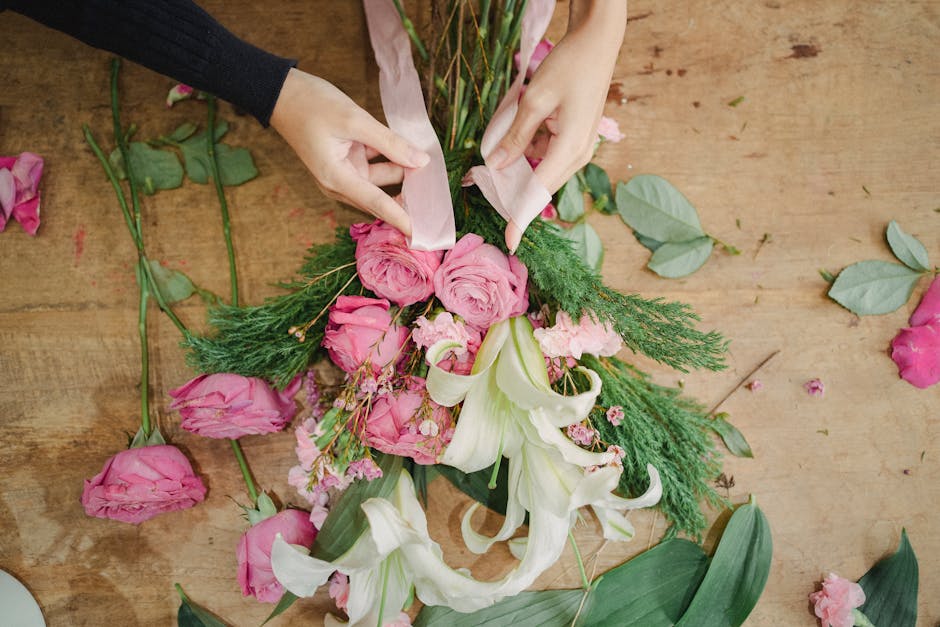
Use twine, ribbon, or florist tie material to secure the spiral just below the flower heads. The tie should hold the stems in place without deforming them. If it is too tight, the bouquet can look pinched and may not hydrate as well later.
For gift bouquets, finishing with ribbon can create a softer, more luxurious feel. For more contemporary styling, natural twine or minimalist wrap may suit better.
8. Trim the stems cleanly
Cut the stems to a manageable length so the bouquet can sit comfortably in water or be held easily. Trim at a slight angle where appropriate, using a clean blade or sharp scissors.
Clean cuts help with water uptake and make the bouquet easier to arrange later in a vase.
9. Finish with wrapping or presentation
The finish should support the flowers, not hide them. A simple kraft wrap, paper collar, or clear protective wrap can protect the bouquet while preserving the shape. If the flowers are going straight into a vase, a tidy tie may be enough.
For delivery gifts, presentation should also consider transport. Good wrapping helps protect petals and keep stems aligned during the journey. If you are purchasing rather than making, look for trustworthy information on delivery details and service expectations.
Expert Tips for Better Results
Good bouquets are rarely accidents. They are usually the result of a few disciplined habits repeated with care.
- Work with seasonal flowers: they are usually fresher, more cost-effective, and easier to build into a natural-looking design.
- Include varied bloom stages: a few tight buds alongside open flowers can make the bouquet feel more alive.
- Use a triangle of focal points: this avoids a flat, front-facing look and helps the bouquet read beautifully from different angles.
- Keep one anchor colour in reserve: if the bouquet starts drifting visually, a repeated colour can pull it back together.
- Hydrate stems early: especially if you are making bouquets for later in the day or for delivery.
- Mind the scent mix: strong fragrances can be lovely, but too many competing scents may feel overpowering in a small room.
One practical observation: if you are unsure whether the bouquet is balanced, step back and squint a little. It is an old florist habit for a reason. The overall shape becomes easier to judge when you stop focusing on individual petals.
Another useful habit is to keep your hands and tools clean. Fresh flowers are delicate, and clean preparation gives the arrangement a more polished result. If you are working with flowers intended for a special event or repeat gifting, it also helps to review service pages like about us to understand the standards behind the product.
Common Mistakes to Avoid
Even experienced flower arrangers can slip into these habits when they are in a hurry. The good news is that most are easy to fix once you know what to look for.
Overfilling the bouquet
A crowded bouquet often looks expensive for about five seconds, then becomes visually noisy. Give the flowers room to breathe. Negative space is part of the design.
Ignoring stem length as you build
If stems are added at wildly different lengths, the bouquet becomes difficult to control. Keep the working length fairly consistent until the final trim.
Using too many strong focal flowers
When every bloom is treated like the star, none of them stand out. Let some flowers support the others.
Forgetting about the bouquet profile
People see bouquets from multiple angles, not just the one in your hand. Always check the sides and back.
Tying too late or too low
If you wait until the bouquet is already falling apart, the spiral will be harder to save. Tie when the structure is still easy to stabilise.
Skipping aftercare
Even the best bouquet will look tired if it is left without water or trimmed carelessly after presentation. Good aftercare is not optional. If you are sending flowers, it helps to point the recipient toward care guidance so the bouquet lasts as long as possible.
Tools, Resources and Recommendations
You do not need a full florist bench to make a beautiful hand-tied bouquet, but the right tools make the work easier and the result cleaner.
- Sharp scissors or florist snips: for neat stem trimming.
- Clean bucket or vase: for conditioning flowers before assembly.
- Florist twine or ribbon: to secure the spiral.
- Wrapping paper or bouquet sleeve: for presentation and protection.
- Fresh water and flower food: to support hydration.
- Bucket towel or clean cloth: to keep stems dry and tidy during prep.
For buyers and recipients, resources matter too. A reputable florist should make it easy to understand how the bouquet will be made, packed, delivered, and cared for. Support pages such as flower care, guarantees, and returns and refund information are part of that trust picture.
If you are ordering for a business, event, or regular gifting schedule, it can also help to see whether corporate accounts are available. That often makes repeat ordering simpler and more consistent.
Law, Compliance, Standards, or Best Practice
For a bouquet itself, there is usually no special legal framework beyond the general expectations that apply to goods sold in the UK. However, best practice still matters a great deal, especially when flowers are sold, delivered, or advertised.
Customers reasonably expect that flowers are fresh, described honestly, and supplied with clear information about delivery, substitutions, and care. Transparent terms help avoid misunderstandings, which is why pages such as terms and conditions, privacy policy, and payment details are relevant to the buying journey.
From an ethical and operational standpoint, many florists also pay close attention to sustainability, supply chains, and accessibility. If those values matter to you, it is sensible to review sustainability and accessibility statement pages before ordering.
In plain English: if a bouquet is sold as premium, it should look premium, arrive in good condition, and be supported by clear customer information. That standard is not glamorous, but it is the backbone of trust.
Options, Methods, or Comparison Table
Not every bouquet needs the same approach. Choosing the right method depends on the occasion, budget, and how much structure you want in the final result.
| Method | Best for | Strengths | Trade-offs |
|---|---|---|---|
| Classic spiral hand-tied bouquet | Gifts, everyday premium florals | Balanced, elegant, easy to tie and carry | Needs practice to keep the spiral even |
| Loose gathered bouquet | Rustic styling, casual gifting | Soft and natural-looking | Can lose shape more easily in transit |
| Structured bouquet with stronger focal points | Events, statement gifts | Dramatic and highly polished | Requires careful stem selection |
| Compact posy-style bouquet | Smaller occasions, hand-held gifts | Neat and easy to manage | Less visual impact than a larger bouquet |
If you want the safest all-round option, the classic spiral hand-tied bouquet usually wins. It is adaptable, looks professional, and suits most occasions without feeling overdesigned. For many readers, that is the sweet spot.
Case Study or Real-World Example
Consider a simple birthday bouquet made for a home dinner party. The brief is clear: it should look generous on arrival, suit a dining table, and feel cheerful without dominating the room.
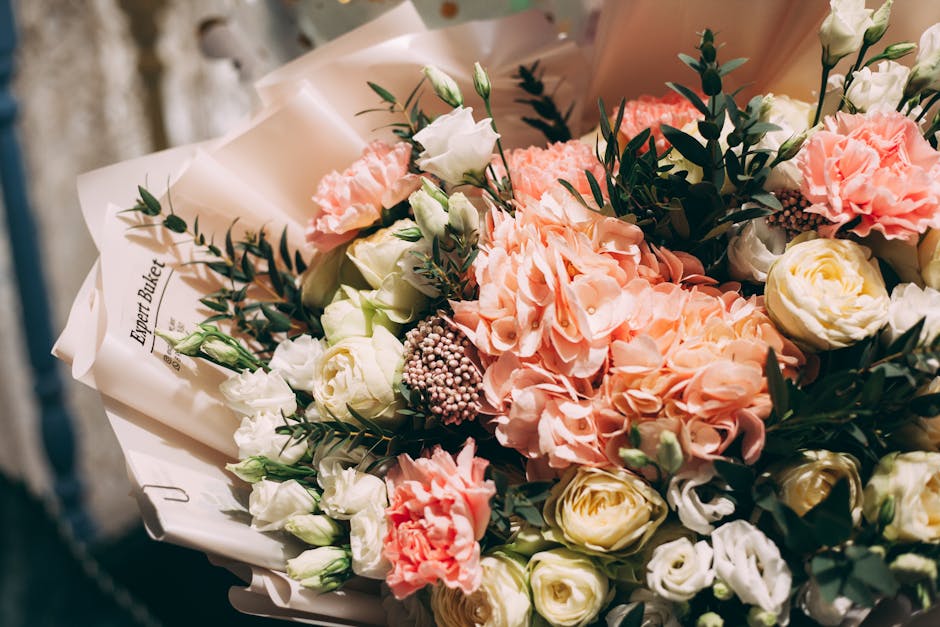
The bouquet starts with cream roses as the focal flower, softened by pale pink spray roses and white lisianthus. Eucalyptus adds shape and a cool green contrast. A few small accent blooms in deeper pink are placed sparingly so the bouquet has dimension, not just a single flat tone.
The maker checks the bouquet from above, then from the side, and notices that one section is slightly heavier. Rather than adding more flowers, they shift a supporting stem and shorten a foliage strand. That tiny edit changes the whole balance. The bouquet now reads as full, airy, and intentional.
When tied and wrapped, the result feels calm and premium. It is not trying too hard, which is exactly why it works. That is usually the secret of a show-stopping hand-tied bouquet: confidence in the structure and restraint in the finishing touches.
In a delivery setting, the same bouquet would benefit from careful packing, clear care instructions, and dependable service information. If you are buying for a specific day or event, the practical side of the experience matters just as much as the flowers themselves.
Practical Checklist
Use this quick checklist before you finish your bouquet:
- Have I chosen a clear colour palette?
- Do the focal flowers have enough space to stand out?
- Have I added secondary blooms for depth and support?
- Is the foliage enhancing the shape rather than overpowering it?
- Does the bouquet look balanced from all sides?
- Have I created a visible spiral in the stems?
- Is the tie secure without crushing the stems?
- Have I trimmed the stems neatly and to the right length?
- Does the wrapping suit the style and occasion?
- Have I checked freshness, hydration, and presentation quality?
Checklist complete? Good. That usually means you are very close to a bouquet that feels professional rather than improvised.
Conclusion
A truly show-stopping hand-tied bouquet is built on a few simple ideas: fresh flowers, a clear colour story, solid spiral structure, and careful finishing. Once those pieces are in place, the bouquet naturally looks more balanced, more luxurious, and more confident.
The best part is that this method scales well. You can use it for a modest gift, a larger celebration bouquet, or a repeatable floral style for regular orders. And once you understand the logic behind it, you will start noticing quality more quickly when choosing flowers from any florist.
If you are planning a gift, event, or business order, now is a good time to review the practical details that sit around the bouquet itself, including contact options, delivery, and service information that helps the whole process run smoothly.
Get a free quote today and see how much you can save.
Frequently Asked Questions
What is a hand-tied bouquet?
A hand-tied bouquet is a floral arrangement built in the hand by crossing and spiralling stems before tying them together. It is designed to look natural, balanced, and easy to present.
Why do florists use the spiral method?
The spiral method helps the bouquet hold its shape, fan out evenly, and sit neatly in the hand or a vase. It also makes the arrangement more stable during wrapping and transport.
What flowers work best in a hand-tied bouquet?
Roses, peonies, lilies, ranunculus, lisianthus, spray roses, carnations, and seasonal blooms all work well, depending on the look you want. Good foliage helps support the design.
How many stems should be in a show-stopping bouquet?
There is no fixed number. A smaller bouquet can still look impressive if the colours, proportions, and textures are well chosen. The quality of placement matters more than a rigid stem count.
How do I keep a hand-tied bouquet from falling apart?
Keep the stems angled consistently as you build the bouquet, tie it before the structure gets loose, and avoid overhandling it once the spiral is formed. Clean trimming also helps.
Should I use foliage in every bouquet?
Not always, but foliage usually helps create shape, movement, and contrast. The key is to support the flowers, not bury them in greenery.
How far in advance can I make a hand-tied bouquet?
You can often make one ahead of time if the flowers are properly conditioned and kept hydrated. For best results, check the bouquet again before presentation and trim stems if needed.
What is the best way to wrap a hand-tied bouquet?
Use wrapping that protects the stems and supports the shape without hiding the flowers. Kraft paper, bouquet sleeves, or soft decorative wrap are all common choices depending on the occasion.
How should a recipient care for the bouquet after delivery?
Trim the stems, place the bouquet in clean water, remove any foliage below the waterline, and keep it away from direct heat or fruit bowls. A proper flower care guide is always helpful.
Is a hand-tied bouquet suitable for corporate gifting?
Yes. It is one of the most flexible styles for business gifting because it looks polished, thoughtful, and suitable for a wide range of recipients. If you order regularly, corporate account options may be useful.
How do I know if the florist is reliable?
Look for clear information on delivery, care, payment, guarantees, and customer support. Transparent service pages such as guarantees and terms and conditions help you judge that quickly.
Can a hand-tied bouquet be seasonal and still look luxurious?
Absolutely. Seasonal flowers often look fresher and more cohesive than a bouquet built from whatever is available. A strong design approach can make seasonal blooms feel especially premium.